




خارطة النزوح والعودة في اليمن: تعز تتصدر المحافظات المستقلِبة للعائدين ومأرب الوجهة الرئيسية للمشردين من الحرب
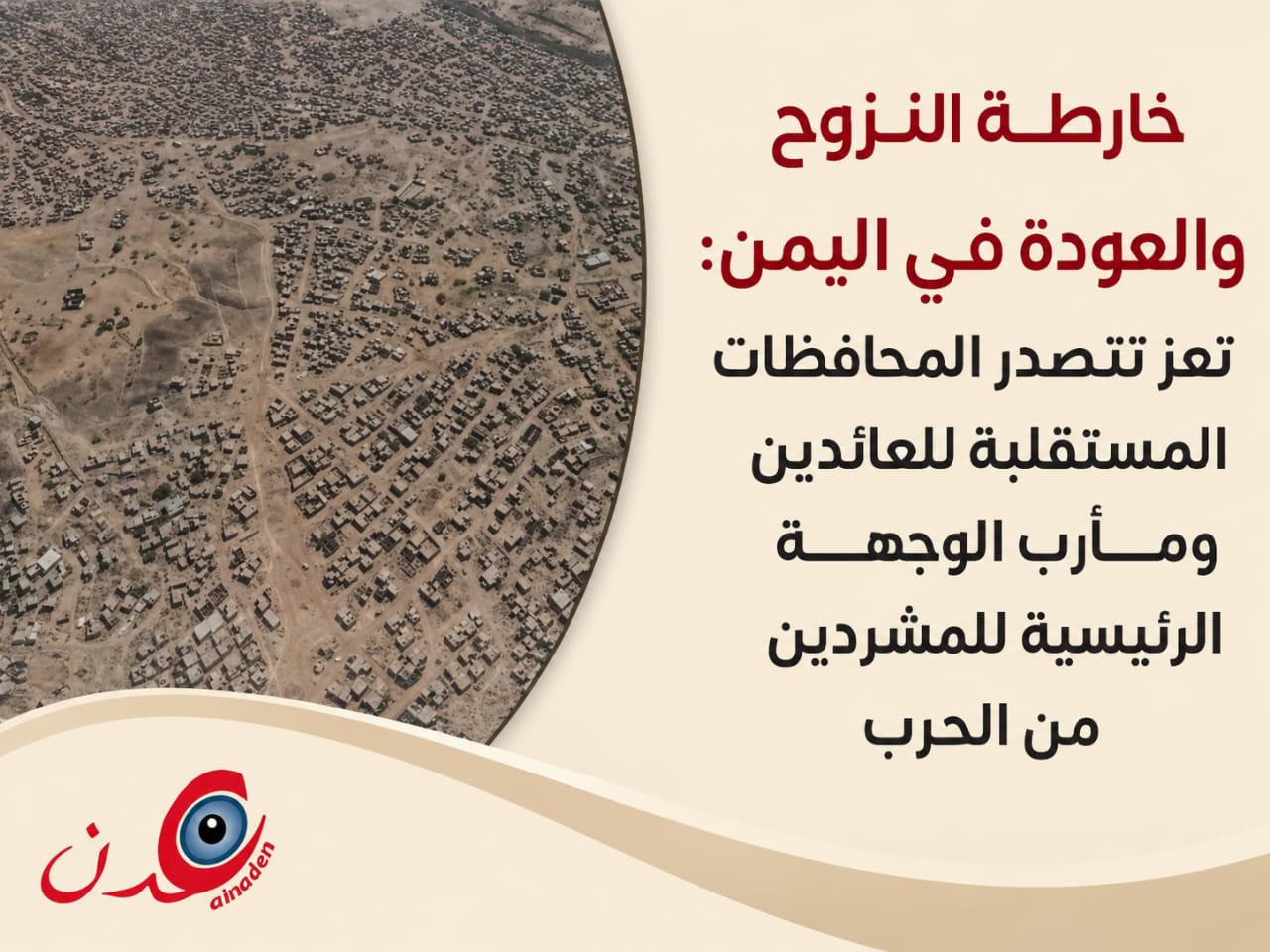
A recent report by the International Organization for Migration stated that there are more than 3.1 million internally displaced persons in areas under the control of the internationally recognized Yemeni government, with the largest proportion of them, about 60 percent, located in Marib Governorate, which remains the main and primary destination for displaced persons since the outbreak of the first spark of the war.
The international organization explained that the comprehensive field assessment it conducted during the months of April and May showed that there are three million, one hundred and forty-seven thousand, two hundred and thirty-five displaced persons, equivalent to about four hundred and eighty-four thousand, three hundred and forty-seven families, currently residing in easily accessible and secure locations within the geographical scope of the governorates under state administration.
The UN report accurately indicated that Marib Governorate hosts the largest number and huge population of these displaced people, amounting to one million eight hundred and seventy-nine thousand six hundred and fifty-two people, which is about sixty percent of the total number of displaced people in the country. This is due to the nature of its geographical location, the availability of multiple and diverse options for shelter, and the ease of humanitarian aid flowing to it compared to other areas.
Taiz Governorate came in second place in terms of capacity, with 438,005 displaced people, equivalent to about 14 percent of the total, while the interim capital, Aden, came in third place, hosting 264,694 displaced people. This reflects the continued trend of displaced families moving to major urban centers that offer better opportunities to access basic services and decent livelihoods.
The International Organization for Migration added in its digital report that Al Hudaydah Governorate is hosting 133,413 displaced persons, while the number of displaced persons settled in Hadramawt Governorate is 97,145, while the rest of the numbers and other groups are distributed among the remaining Yemeni governorates in varying proportions according to the circumstances.
The organization stressed that this geographical distribution clearly reflects the continuation and deepening of the bitter displacement crisis in Yemen, with a marked difference in the levels of popular and official hosting depending on the severity of the nearby armed conflict, the availability of humanitarian relief supplies, and the ability of local host communities to absorb these incoming numbers.
On another promising note, the UN assessment showed that 2,105,571 people, equivalent to 298,113 families, have returned to their homes and original settled areas in the governorates under the administration of the legitimate government.
Taiz Governorate topped the list of governorates in terms of the number of returning citizens, with 783,181 people, followed by the interim capital Aden with 647,591 people, then Al Dhale’ Governorate with 151,290 people, Shabwa Governorate with 118,490 people, and Lahj Governorate with 115,066 people.
The report attributed the reasons for this widespread return to the fact that eighty-five percent of the returnees made their decision as a result of the improvement in security and living conditions in their original areas, and about fourteen percent of them preferred to return due to the deterioration of economic and housing conditions in their temporary displacement locations, while the rest of the cases were distributed among other general reasons, including family reunification and forced expulsion from some displacement sites.
According to the latest estimates issued by the United Nations, the total number of displaced persons throughout Yemen is about five million and two hundred thousand people living in exceptionally difficult conditions in light of the continued armed conflict and its catastrophic repercussions on the general humanitarian situation in the country.